Simple good habits can save you power without being too inconvenient. Your changes in habit
and therefore power consumption can be viewed on a building power meter. You
should be aiming to keep its average reading as low as possible.
Here are some suggestions on how to keep your total consumption low.
- Keep your showers to a maximum of 4 minutes
- Turn off lights as you leave the room
- Turn off computers when not in use
- Turn off entertainment equipment at the wall when you have finished using them
- Use sunlight instead of artificial light
- Dress appropriately to the climate
- Use natural breezes before fans and air conditioners
- Where possible use fans instead of air conditioning
- Close doors and windows if using air conditioning to reduce load
- Fans can be used to assist air conditioners distribute air
- Set cooling air conditioning to 24 degrees Celsius
- Set reverse cycle air conditioning heating to 20 degrees Celsius
- Clean air conditioner filters regularly
- Fix any hot water leaks or drips quickly
- Use cold water in your washing machine
- Hang washing on a line instead of using the dryer
- Clean dryer filter regularly
- When going away for holidays turn off most electrical devices at the power point.
- Try to use only one fridge, or if buying in bulk keep a second fridge or freezer well stocked to improve efficiency
 Producing hot water for your home is a large part of your electricity consumption. You
consume electricity when using hot water, when it is heating up and when it is
maintaining the temperature of the storage tank. Electricity consumption of hot
water heaters can be in the order of 3600 to 6000 Watts. One way to save on hot
water usage is to have water saving shower heads that only use 9 litres per
minute. Installed aerators in your bathroom taps to reduce water use down to 5
litres per minute. For kitchen and laundries the recommended aerator reduces
water consumption down to 7 litres per minute. It takes 0.052 kWh to heat 1
litre of water 45 degrees Celsius. Estimate your potential savings in hot water
consumption by initially measuring your current water consumption rate by
timing how long it takes to fill a known sized container. A rough regular
figure would be 20 litres per minute. Then estimate your total showering time
per day, total hand washing time per day, total dish rinsing time per day etc.
Calculate your total water use for a day and then multiple by 365 to work out
yearly consumption. An estimate needs to be made on what proportion of water
used is from the hot water supply. Compare your water consumption rate now
against what you could be saving as seen in the example shown below.
Producing hot water for your home is a large part of your electricity consumption. You
consume electricity when using hot water, when it is heating up and when it is
maintaining the temperature of the storage tank. Electricity consumption of hot
water heaters can be in the order of 3600 to 6000 Watts. One way to save on hot
water usage is to have water saving shower heads that only use 9 litres per
minute. Installed aerators in your bathroom taps to reduce water use down to 5
litres per minute. For kitchen and laundries the recommended aerator reduces
water consumption down to 7 litres per minute. It takes 0.052 kWh to heat 1
litre of water 45 degrees Celsius. Estimate your potential savings in hot water
consumption by initially measuring your current water consumption rate by
timing how long it takes to fill a known sized container. A rough regular
figure would be 20 litres per minute. Then estimate your total showering time
per day, total hand washing time per day, total dish rinsing time per day etc.
Calculate your total water use for a day and then multiple by 365 to work out
yearly consumption. An estimate needs to be made on what proportion of water
used is from the hot water supply. Compare your water consumption rate now
against what you could be saving as seen in the example shown below.
| No. of People |
Shower time (minutes) |
Days in year |
Consumption in litres per minute |
Proportion hot water |
Yearly Hot Water Usage |
| 3 |
5 |
365 |
20 |
0.5 |
54750 |
| 3 |
5 |
365 |
9 |
0.5 |
24637.5 |
|
|
|
|
Saving |
30112.5 |
Once you have a total yearly figure for your hot water usage use the following litres versus
$ kWh table to show your savings per year (use your local cost of electricity
column).
| Litres / $kWh |
Local cost of electricity in dollars per kilowatt hour (kWh) |
|
0.08 |
0.1 |
0.12 |
0.14 |
0.16 |
0.18 |
0.2 |
0.22 |
0.24 |
| 5000 |
$21 |
$26 |
$31 |
$36 |
$42 |
$47 |
$52 |
$57 |
$62 |
| 10000 |
$42 |
$52 |
$62 |
$73 |
$83 |
$94 |
$104 |
$114 |
$125 |
| 15000 |
$62 |
$78 |
$94 |
$109 |
$125 |
$140 |
$156 |
$172 |
$187 |
| 20000 |
$83 |
$104 |
$125 |
$146 |
$166 |
$187 |
$208 |
$229 |
$250 |
| 25000 |
$104 |
$130 |
$156 |
$182 |
$208 |
$234 |
$260 |
$286 |
$312 |
| 30000 |
$125 |
$156 |
$187 |
$218 |
$250 |
$281 |
$312 |
$343 |
$374 |
| 35000 |
$146 |
$182 |
$218 |
$255 |
$291 |
$328 |
$364 |
$400 |
$437 |
| 40000 |
$166 |
$208 |
$250 |
$291 |
$333 |
$374 |
$416 |
$458 |
$499 |
| 45000 |
$187 |
$234 |
$281 |
$328 |
$374 |
$421 |
$468 |
$515 |
$562 |
| 50000 |
$208 |
$260 |
$312 |
$364 |
$416 |
$468 |
$520 |
$572 |
$624 |
| 55000 |
$229 |
$286 |
$343 |
$400 |
$458 |
$515 |
$572 |
$629 |
$686 |
| 60000 |
$250 |
$312 |
$374 |
$437 |
$499 |
$562 |
$624 |
$686 |
$749 |
| 65000 |
$270 |
$338 |
$406 |
$473 |
$541 |
$608 |
$676 |
$744 |
$811 |
| 70000 |
$291 |
$364 |
$437 |
$510 |
$582 |
$655 |
$728 |
$801 |
$874 |
The cost of water saving hardware is approximately $40 for a shower rose and $10 for an
aerator. You will need to add labour costs for fitting if necessary. The table
shows that the water saving investment of installing water saving devices and
therefore your power saving investment is a worthwhile consideration.
Suggestions:
Fix any hot water leaks or drips quickly.
Alternatives:
Heat Pump Hot Water, Gas or Solar Hot Water, Instant Gas Hot Water.
Related Sections:
Solar Hot Water
Co-Generation
Local Assistance:
Hot Water Calculator
Solar Hot Water Calculator
References for further information
1
5
6
7
123
126
Table of Contents
Reference Links
To make your pool pump more electrically efficient us a timer to control it's operating
hours. This will save your significant amounts of energy over a year. An
electrical timer can cost less than $10. Pumps use 500 to 1500 watts. To make a
comparison we've used an average of a 1000 Watt for the pump load and look at
the costs for running it from 1 to 24 hours per day by using your local cost of electricity column.
Variable speed pumps can also save energy. High speed can be used for cleaning and low speed for filtering.
To compare the yearly cost of running a 1kW pump for 1-24 hours per day use your local
cost of electricity column
|
Hours a day / $kWh
|
Local cost of electricity in dollars per kilowatt hour (kWh)
|
|
0.08
|
0.1
|
0.12
|
0.14
|
0.16
|
0.18
|
0.2
|
0.22
|
0.24
|
|
1
|
$29
|
$37
|
$44
|
$51
|
$58
|
$66
|
$73
|
$80
|
$88
|
|
2
|
$58
|
$73
|
$88
|
$102
|
$117
|
$131
|
$146
|
$161
|
$175
|
|
3
|
$88
|
$110
|
$131
|
$153
|
$175
|
$197
|
$219
|
$241
|
$263
|
|
4
|
$117
|
$146
|
$175
|
$204
|
$234
|
$263
|
$292
|
$321
|
$350
|
|
5
|
$146
|
$183
|
$219
|
$256
|
$292
|
$329
|
$365
|
$402
|
$438
|
|
6
|
$175
|
$219
|
$263
|
$307
|
$350
|
$394
|
$438
|
$482
|
$526
|
|
7
|
$204
|
$256
|
$307
|
$358
|
$409
|
$460
|
$511
|
$562
|
$613
|
|
8
|
$234
|
$292
|
$350
|
$409
|
$467
|
$526
|
$584
|
$642
|
$701
|
|
9
|
$263
|
$329
|
$394
|
$460
|
$526
|
$591
|
$657
|
$723
|
$788
|
|
10
|
$292
|
$365
|
$438
|
$511
|
$584
|
$657
|
$730
|
$803
|
$876
|
|
11
|
$321
|
$402
|
$482
|
$562
|
$642
|
$723
|
$803
|
$883
|
$964
|
|
12
|
$350
|
$438
|
$526
|
$613
|
$701
|
$788
|
$876
|
$964
|
$1,051
|
|
13
|
$380
|
$475
|
$569
|
$664
|
$759
|
$854
|
$949
|
$1,044
|
$1,139
|
|
14
|
$409
|
$511
|
$613
|
$715
|
$818
|
$920
|
$1,022
|
$1,124
|
$1,226
|
|
15
|
$438
|
$548
|
$657
|
$767
|
$876
|
$986
|
$1,095
|
$1,205
|
$1,314
|
|
16
|
$467
|
$584
|
$701
|
$818
|
$934
|
$1,051
|
$1,168
|
$1,285
|
$1,402
|
|
17
|
$496
|
$621
|
$745
|
$869
|
$993
|
$1,117
|
$1,241
|
$1,365
|
$1,489
|
|
18
|
$526
|
$657
|
$788
|
$920
|
$1,051
|
$1,183
|
$1,314
|
$1,445
|
$1,577
|
|
19
|
$555
|
$694
|
$832
|
$971
|
$1,110
|
$1,248
|
$1,387
|
$1,526
|
$1,664
|
|
20
|
$584
|
$730
|
$876
|
$1,022
|
$1,168
|
$1,314
|
$1,460
|
$1,606
|
$1,752
|
|
21
|
$613
|
$767
|
$920
|
$1,073
|
$1,226
|
$1,380
|
$1,533
|
$1,686
|
$1,840
|
|
22
|
$642
|
$803
|
$964
|
$1,124
|
$1,285
|
$1,445
|
$1,606
|
$1,767
|
$1,927
|
|
23
|
$672
|
$840
|
$1,007
|
$1,175
|
$1,343
|
$1,511
|
$1,679
|
$1,847
|
$2,015
|
|
24
|
$701
|
$876
|
$1,051
|
$1,226
|
$1,402
|
$1,577
|
$1,752
|
$1,927
|
$2,102
|
Suggestions: Have
your pool pump connected to off peak electricity to save costs. Adjust the pump
timer to suit the season of use. I.e. more in summer when the pool is most in use
and need for filtration is highest.
Consider copper and/or silver ionization to lower the required pumping hours and chemicals needed.
Related Sections:
Timers
Power Factor Correction
Local Assistance:
Appliance Energy Calculator
References for further information
1
Table of Contents
Reference Links
 The air conditioning requirements for an area is dependant on many factors. Careful
building design and use can minimize the size of the air conditioner required
and its running costs. Parameters to consider include the size of the room; the
size and orientation of windows and doors; if insulation is in the walls and
ceiling; the number of people present; and the total electrical devices in the room.
The air conditioning requirements for an area is dependant on many factors. Careful
building design and use can minimize the size of the air conditioner required
and its running costs. Parameters to consider include the size of the room; the
size and orientation of windows and doors; if insulation is in the walls and
ceiling; the number of people present; and the total electrical devices in the room.
Local climate should influence a building's design to take into consideration the
sun's path relative to the buildings orientation and how eaves can reduce walls
heating up. Consider investing in insulation before adding an air conditioner.
Well insulated buildings will reduce your air conditioning requirement and
running costs with a good return on your investment. Careful selection of
electrical equipment and minimising its energy consumption and related heat
output will have an added benefit in reduced air conditioning costs. Running
some air conditioners on off peak electricity can generate worthwhile savings.
Reverse cycle air conditioners are one of the most efficient area heating
devices. Air conditioners with an inverter circuit design control the
compressor speed very efficiently which therefore controls the room temperature
with greater precision. Look for air conditioners with Energy Star labels.
Reverse cycle models will have 2 sets of stars for heating and cooling.
Air condtioner efficiency has improved about one third in the last 10 years.
Look at the output kW versus input kW to compare efficiencies.
Landscaping can have an influence on the shading of a building and the breezes available
which may reduce air conditioner running hours. In hot dry climates evaporative
cooling has lower running costs compared to refrigerated air conditioning.
To compare the six month maximum cost of running a 1.66kW power input (~5kW cooling) split
system air conditioner for 1-24 hours per day use your local cost of
electricity column
| Hours a day / $kWh |
Local cost of electricity in dollars per kilowatt hour (kWh) |
|
0.08
|
0.1
|
0.12
|
0.14
|
0.16
|
0.18
|
0.2
|
0.22
|
0.24
|
|---|
|
1
|
$25
|
$31
|
$37
|
$43
|
$49
|
$55
|
$61
|
$67
|
$74
|
|
2
|
$49
|
$61
|
$74
|
$86
|
$98
|
$110
|
$123
|
$135
|
$147
|
|
3
|
$74
|
$92
|
$110
|
$129
|
$147
|
$166
|
$184
|
$202
|
$221
|
|
4
|
$98
|
$123
|
$147
|
$172
|
$196
|
$221
|
$245
|
$270
|
$294
|
|
5
|
$123
|
$153
|
$184
|
$215
|
$245
|
$276
|
$307
|
$337
|
$368
|
|
6
|
$147
|
$184
|
$221
|
$258
|
$294
|
$331
|
$368
|
$405
|
$442
|
|
7
|
$172
|
$215
|
$258
|
$300
|
$343
|
$386
|
$429
|
$472
|
$515
|
|
8
|
$196
|
$245
|
$294
|
$343
|
$392
|
$442
|
$491
|
$540
|
$589
|
|
9
|
$221
|
$276
|
$331
|
$386
|
$442
|
$497
|
$552
|
$607
|
$662
|
|
10
|
$245
|
$307
|
$368
|
$429
|
$491
|
$552
|
$613
|
$675
|
$736
|
|
11
|
$270
|
$337
|
$405
|
$472
|
$540
|
$607
|
$675
|
$742
|
$809
|
|
12
|
$294
|
$368
|
$442
|
$515
|
$589
|
$662
|
$736
|
$809
|
$883
|
|
13
|
$319
|
$399
|
$478
|
$558
|
$638
|
$717
|
$797
|
$877
|
$957
|
|
14
|
$343
|
$429
|
$515
|
$601
|
$687
|
$773
|
$858
|
$944
|
$1,030
|
|
15
|
$368
|
$460
|
$552
|
$644
|
$736
|
$828
|
$920
|
$1,012
|
$1,104
|
|
16
|
$392
|
$491
|
$589
|
$687
|
$785
|
$883
|
$981
|
$1,079
|
$1,177
|
|
17
|
$417
|
$521
|
$625
|
$730
|
$834
|
$938
|
$1,042
|
$1,147
|
$1,251
|
|
18
|
$442
|
$552
|
$662
|
$773
|
$883
|
$993
|
$1,104
|
$1,214
|
$1,325
|
|
19
|
$466
|
$583
|
$699
|
$816
|
$932
|
$1,049
|
$1,165
|
$1,282
|
$1,398
|
|
20
|
$491
|
$613
|
$736
|
$858
|
$981
|
$1,104
|
$1,226
|
$1,349
|
$1,472
|
|
21
|
$515
|
$644
|
$773
|
$901
|
$1,030
|
$1,159
|
$1,288
|
$1,416
|
$1,545
|
|
22
|
$540
|
$675
|
$809
|
$944
|
$1,079
|
$1,214
|
$1,349
|
$1,484
|
$1,619
|
|
23
|
$564
|
$705
|
$846
|
$987
|
$1,128
|
$1,269
|
$1,410
|
$1,551
|
$1,692
|
|
24
|
$589
|
$736
|
$883
|
$1,030
|
$1,177
|
$1,325
|
$1,472
|
$1,619
|
$1,766
|
Suggestions:
Set
cooling temperature to 24 degrees Celsius, set heating temperature to 20
degrees Celsius and use timers if available. Close doors and windows when using
an air conditioner. Keep air conditioning filters clean for operating efficiency.
Related Sections:
Draft Stopper
Work Air Conditioning
Timers
Insulation
Measurement
Local Assistance:
Appliance Energy Calculator
References for further information
1
4
8
9
123
126
Table of Contents
Reference Links
Fridges are
one of the larger consumers of electricity that operate full time. Expect each
fridge to consume between $30 and $130 per year, dependant on its size. Energy
efficiency in refrigeration has improved over time and minimum standards have
been in place since 1999 and then were improved again in 2005. Look for the
Energy Star labels for you're in the shop comparisons and note the expected
kWh/year consumption. Older fridges usually have poorer efficiency. Disposal of
fridges from the early 1990s or earlier may require special procedures as they
probably contain CFC gas and may require special procedures. Setting the fridge at 3 degrees Celsius and the freezer at
-18 degrees Celsius is recommended and this can be confirmed using a fridge
thermometer.
Suggestions:
Look up Energy Star award winner fridges for comparison before
purchasing one (see references). Confirm the fridge can fit through the
doorways into the final location.
Try to use only one fridge/freezer. Allow an air gap around the fridge for heat
dissipation. Avoid leaving the fridge door open for extended time. Fix any door
seal issues quickly. Having a fridge fairly full will reduce the amount of cold
air lost when the door is opened. Confirm the door opens the way that suits
your location.
Related Sections:
Measurement
Local Assistance:
Appliance Energy Calculator
References for further information
4
123
124
Table of Contents
Reference Links
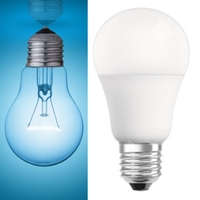 Your choice of lighting is an easy method to reduce energy consumption.
Light Emitting Diode (LED) lights uses approximately 85% less energy for the same light output as
incandescent lights. LED have lifespans of 15,000 to 30,000 hours.
LED tube lighting uses approxmately 50% less energy than CFL tubes.
Note that the starter also needs to be replaced for LED operations.
Compact Fluorescent Lights (CFL) use approximately 80% less energy for the same light output as
incandescent lights. CFL have a life span of 10,000 hours compared to an incandescent 1000 hour life.
Consider the light physical size, wattage and connection thread. e.g. Bayonet Cap (BC) or Edison
Screw (ES).
Your priority should be to replace those lights that are used the most.
Also consider the labour costs necessary.
The return on investment shown in the tables below is after a few hundred hours of use. CFL and LED
can be bought in most supermarkets and hardware stores. Specialised CFL and LED can be
used with dimmers. Added benefits include less heat output which reduces air
conditioning running costs. There is an Australian Government policy to prevent
incandescent light bulb imports after November 2008 and prevent incandescent
light bulb sales after November 2009.
Yearly cost of running a 60 watt incandescent light bulb
| Hours a day / $kWh |
Local cost of electricity in dollars per kilowatt hour (kWh) |
|
0.08 |
0.1 |
0.12 |
0.14 |
0.16 |
0.18 |
0.2 |
0.22 |
0.24 |
|---|
| 1 |
$1.75 |
$2.19 |
$2.63 |
$3.07 |
$3.50 |
$3.94 |
$4.38 |
$4.82 |
$5.26 |
| 2 |
$3.50 |
$4.38 |
$5.26 |
$6.13 |
$7.01 |
$7.88 |
$8.76 |
$9.64 |
$10.51 |
| 3 |
$5.26 |
$6.57 |
$7.88 |
$9.20 |
$10.51 |
$11.83 |
$13.14 |
$14.45 |
$15.77 |
| 4 |
$7.01 |
$8.76 |
$10.51 |
$12.26 |
$14.02 |
$15.77 |
$17.52 |
$19.27 |
$21.02 |
| 5 |
$8.76 |
$10.95 |
$13.14 |
$15.33 |
$17.52 |
$19.71 |
$21.90 |
$24.09 |
$26.28 |
| 6 |
$10.51 |
$13.14 |
$15.77 |
$18.40 |
$21.02 |
$23.65 |
$26.28 |
$28.91 |
$31.54 |
| 7 |
$12.26 |
$15.33 |
$18.40 |
$21.46 |
$24.53 |
$27.59 |
$30.66 |
$33.73 |
$36.79 |
| 8 |
$14.02 |
$17.52 |
$21.02 |
$24.53 |
$28.03 |
$31.54 |
$35.04 |
$38.54 |
$42.05 |
| 9 |
$15.77 |
$19.71 |
$23.65 |
$27.59 |
$31.54 |
$35.48 |
$39.42 |
$43.36 |
$47.30 |
| 10 |
$17.52 |
$21.90 |
$26.28 |
$30.66 |
$35.04 |
$39.42 |
$43.80 |
$48.18 |
$52.56 |
| 11 |
$19.27 |
$24.09 |
$28.91 |
$33.73 |
$38.54 |
$43.36 |
$48.18 |
$53.00 |
$57.82 |
| 12 |
$21.02 |
$26.28 |
$31.54 |
$36.79 |
$42.05 |
$47.30 |
$52.56 |
$57.82 |
$63.07 |
Yearly cost of running an 11 watt Compact Fluorescent Light
| Hours a day / $kWh |
Local cost of electricity in dollars per kilowatt hour (kWh) |
|
0.08 |
0.1 |
0.12 |
0.14 |
0.16 |
0.18 |
0.2 |
0.22 |
0.24 |
|---|
| 1 |
$0.32 |
$0.40 |
$0.48 |
$0.56 |
$0.64 |
$0.72 |
$0.80 |
$0.88 |
$0.96 |
| 2 |
$0.64 |
$0.80 |
$0.96 |
$1.12 |
$1.28 |
$1.45 |
$1.61 |
$1.77 |
$1.93 |
| 3 |
$0.96 |
$1.20 |
$1.45 |
$1.69 |
$1.93 |
$2.17 |
$2.41 |
$2.65 |
$2.89 |
| 4 |
$1.28 |
$1.61 |
$1.93 |
$2.25 |
$2.57 |
$2.89 |
$3.21 |
$3.53 |
$3.85 |
| 5 |
$1.61 |
$2.01 |
$2.41 |
$2.81 |
$3.21 |
$3.61 |
$4.02 |
$4.42 |
$4.82 |
| 6 |
$1.93 |
$2.41 |
$2.89 |
$3.37 |
$3.85 |
$4.34 |
$4.82 |
$5.30 |
$5.78 |
| 7 |
$2.25 |
$2.81 |
$3.37 |
$3.93 |
$4.50 |
$5.06 |
$5.62 |
$6.18 |
$6.75 |
| 8 |
$2.57 |
$3.21 |
$3.85 |
$4.50 |
$5.14 |
$5.78 |
$6.42 |
$7.07 |
$7.71 |
| 9 |
$2.89 |
$3.61 |
$4.34 |
$5.06 |
$5.78 |
$6.50 |
$7.23 |
$7.95 |
$8.67 |
| 10 |
$3.21 |
$4.02 |
$4.82 |
$5.62 |
$6.42 |
$7.23 |
$8.03 |
$8.83 |
$9.64 |
| 11 |
$3.53 |
$4.42 |
$5.30 |
$6.18 |
$7.07 |
$7.95 |
$8.83 |
$9.72 |
$10.60 |
| 12 |
$3.85 |
$4.82 |
$5.78 |
$6.75 |
$7.71 |
$8.67 |
$9.64 |
$10.60 |
$11.56 |
Suggestions:
Remember to turn off lights when you leave a room. Invest in timers or motion sensors
for security lighting applications. CFL/LED are also available for floodlights. CFL/LED
also come in candle shaped fittings. CFL/LED can be used in some range hood
lighting.
Related Sections:
Timers
Measurement
Halogen Lights vs LED Lights
Local Assistance:
Light Energy Calculator
References for further information
1
10
11
126
139
Table of Contents
Reference Links
 Light Emitting Diodes (LED) have been in the electronics industry for years but have recently
scaled up in lighting output to now replace most light fixtures. They have
extremely long life spans of up to 30,000 hours so you may never have to
replace this light. This has to be balanced with their initial high purchase
price of around $10 to $15. Compared to a 35 watt halogen bulb a LED light can
give the same lighting output for 5 watts. This also means that 6-8 LED lights
can run off a single halogen transformer. An alternative is to replace the
whole 12 volt halogen fitting for a 240 volt CFL/LED fitting that fits in the same
hole which uses only 7-11 watts. This type of fitting is approximately $30 plus
fitting. They come with 240 volt leads with 3 pin plugs for simple replacement.
LED lighting can also be seen in some traffic lights, path lighting, display
fridges, garden lighting and solar powered lighting. An added benefit is they
produce less heat output which in turn reduces air conditioning running costs.
Light Emitting Diodes (LED) have been in the electronics industry for years but have recently
scaled up in lighting output to now replace most light fixtures. They have
extremely long life spans of up to 30,000 hours so you may never have to
replace this light. This has to be balanced with their initial high purchase
price of around $10 to $15. Compared to a 35 watt halogen bulb a LED light can
give the same lighting output for 5 watts. This also means that 6-8 LED lights
can run off a single halogen transformer. An alternative is to replace the
whole 12 volt halogen fitting for a 240 volt CFL/LED fitting that fits in the same
hole which uses only 7-11 watts. This type of fitting is approximately $30 plus
fitting. They come with 240 volt leads with 3 pin plugs for simple replacement.
LED lighting can also be seen in some traffic lights, path lighting, display
fridges, garden lighting and solar powered lighting. An added benefit is they
produce less heat output which in turn reduces air conditioning running costs.
Yearly cost of running a 50 watt halogen light bulb
| Hours a day / $kWh |
Local cost of electricity in dollars per kilowatt hour (kWh) |
|
0.08 |
0.1 |
0.12 |
0.14 |
0.16 |
0.18 |
0.2 |
0.22 |
0.24 |
|---|
| 1 |
$1.46 |
$1.83 |
$2.19 |
$2.56 |
$2.92 |
$3.29 |
$3.65 |
$4.02 |
$4.38 |
| 2 |
$2.92 |
$3.65 |
$4.38 |
$5.11 |
$5.84 |
$6.57 |
$7.30 |
$8.03 |
$8.76 |
| 3 |
$4.38 |
$5.48 |
$6.57 |
$7.67 |
$8.76 |
$9.86 |
$10.95 |
$12.05 |
$13.14 |
| 4 |
$5.84 |
$7.30 |
$8.76 |
$10.22 |
$11.68 |
$13.14 |
$14.60 |
$16.06 |
$17.52 |
| 5 |
$7.30 |
$9.13 |
$10.95 |
$12.78 |
$14.60 |
$16.43 |
$18.25 |
$20.08 |
$21.90 |
| 6 |
$8.76 |
$10.95 |
$13.14 |
$15.33 |
$17.52 |
$19.71 |
$21.90 |
$24.09 |
$26.28 |
| 7 |
$10.22 |
$12.78 |
$15.33 |
$17.89 |
$20.44 |
$23.00 |
$25.55 |
$28.11 |
$30.66 |
| 8 |
$11.68 |
$14.60 |
$17.52 |
$20.44 |
$23.36 |
$26.28 |
$29.20 |
$32.12 |
$35.04 |
| 9 |
$13.14 |
$16.43 |
$19.71 |
$23.00 |
$26.28 |
$29.57 |
$32.85 |
$36.14 |
$39.42 |
| 10 |
$14.60 |
$18.25 |
$21.90 |
$25.55 |
$29.20 |
$32.85 |
$36.50 |
$40.15 |
$43.80 |
| 11 |
$16.06 |
$20.08 |
$24.09 |
$28.11 |
$32.12 |
$36.14 |
$40.15 |
$44.17 |
$48.18 |
| 12 |
$17.52 |
$21.90 |
$26.28 |
$30.66 |
$35.04 |
$39.42 |
$43.80 |
$48.18 |
$52.56 |
Yearly cost of running a 5 watt LED light
| Hours a day / $kWh |
Local cost of electricity in dollars per kilowatt hour (kWh) |
|
0.08 |
0.1 |
0.12 |
0.14 |
0.16 |
0.18 |
0.2 |
0.22 |
0.24 |
|---|
| 1 |
$0.15 |
$0.18 |
$0.22 |
$0.26 |
$0.29 |
$0.33 |
$0.37 |
$0.40 |
$0.44 |
| 2 |
$0.29 |
$0.37 |
$0.44 |
$0.51 |
$0.58 |
$0.66 |
$0.73 |
$0.80 |
$0.88 |
| 3 |
$0.44 |
$0.55 |
$0.66 |
$0.77 |
$0.88 |
$0.99 |
$1.10 |
$1.20 |
$1.31 |
| 4 |
$0.58 |
$0.73 |
$0.88 |
$1.02 |
$1.17 |
$1.31 |
$1.46 |
$1.61 |
$1.75 |
| 5 |
$0.73 |
$0.91 |
$1.10 |
$1.28 |
$1.46 |
$1.64 |
$1.83 |
$2.01 |
$2.19 |
| 6 |
$0.88 |
$1.10 |
$1.31 |
$1.53 |
$1.75 |
$1.97 |
$2.19 |
$2.41 |
$2.63 |
| 7 |
$1.02 |
$1.28 |
$1.53 |
$1.79 |
$2.04 |
$2.30 |
$2.56 |
$2.81 |
$3.07 |
| 8 |
$1.17 |
$1.46 |
$1.75 |
$2.04 |
$2.34 |
$2.63 |
$2.92 |
$3.21 |
$3.50 |
| 9 |
$1.31 |
$1.64 |
$1.97 |
$2.30 |
$2.63 |
$2.96 |
$3.29 |
$3.61 |
$3.94 |
| 10 |
$1.46 |
$1.83 |
$2.19 |
$2.56 |
$2.92 |
$3.29 |
$3.65 |
$4.02 |
$4.38 |
| 11 |
$1.61 |
$2.01 |
$2.41 |
$2.81 |
$3.21 |
$3.61 |
$4.02 |
$4.42 |
$4.82 |
| 12 |
$1.75 |
$2.19 |
$2.63 |
$3.07 |
$3.50 |
$3.94 |
$4.38 |
$4.82 |
$5.26 |
Suggestions:
Remember
to turn off lights when you leave a room. Invest in timers or motion sensors
for security lighting applications.
Related Sections:
Timers
Measurement
Incandescent Lights vs Compact Fluorescent Lights
Local Assistance:
Light Energy Calculator
References for further information
1
12
126
127
137
138
Table of Contents
Reference Links
 Before buying a television try to work out its running and standby electrical
consumption. Generally (LED LCD) screens use less energy
than equal (LCD) TVs. Older Plasma/CRT/Rear projection televisions use much more power.
Larger screens generally use more power than smaller screens. The standby consumption varies
greatly from 1 to 70 watts and can contribute a high proportion to its running
cost. If you want to reduce the standby costs consider connecting a timer to be
on only while you normally watch TV or simply turn it off at the wall. Assume a
television can use between $30 and $200 a year to run. A real time power
measurement device on a single power point connected to the TV will show the
running cost over time.
Before buying a television try to work out its running and standby electrical
consumption. Generally (LED LCD) screens use less energy
than equal (LCD) TVs. Older Plasma/CRT/Rear projection televisions use much more power.
Larger screens generally use more power than smaller screens. The standby consumption varies
greatly from 1 to 70 watts and can contribute a high proportion to its running
cost. If you want to reduce the standby costs consider connecting a timer to be
on only while you normally watch TV or simply turn it off at the wall. Assume a
television can use between $30 and $200 a year to run. A real time power
measurement device on a single power point connected to the TV will show the
running cost over time.
32 inch LCD TV with 80 watt running consumption for 1 year
| Hours a day / $kWh |
Local cost of electricity in dollars per kilowatt hour (kWh) |
|
0.08 |
0.1 |
0.12 |
0.14 |
0.16 |
0.18 |
0.2 |
0.22 |
0.24 |
|---|
| 1 |
$2.34 |
$2.92 |
$3.50 |
$4.09 |
$4.67 |
$5.26 |
$5.84 |
$6.42 |
$7.01 |
| 2 |
$4.67 |
$5.84 |
$7.01 |
$8.18 |
$9.34 |
$10.51 |
$11.68 |
$12.85 |
$14.02 |
| 3 |
$7.01 |
$8.76 |
$10.51 |
$12.26 |
$14.02 |
$15.77 |
$17.52 |
$19.27 |
$21.02 |
| 4 |
$9.34 |
$11.68 |
$14.02 |
$16.35 |
$18.69 |
$21.02 |
$23.36 |
$25.70 |
$28.03 |
| 5 |
$11.68 |
$14.60 |
$17.52 |
$20.44 |
$23.36 |
$26.28 |
$29.20 |
$32.12 |
$35.04 |
| 6 |
$14.02 |
$17.52 |
$21.02 |
$24.53 |
$28.03 |
$31.54 |
$35.04 |
$38.54 |
$42.05 |
| 7 |
$16.35 |
$20.44 |
$24.53 |
$28.62 |
$32.70 |
$36.79 |
$40.88 |
$44.97 |
$49.06 |
| 8 |
$18.69 |
$23.36 |
$28.03 |
$32.70 |
$37.38 |
$42.05 |
$46.72 |
$51.39 |
$56.06 |
| Standby Watts / $kWh |
Local cost of electricity in dollars per kilowatt hour (kWh) |
|
0.08 |
0.1 |
0.12 |
0.14 |
0.16 |
0.18 |
0.2 |
0.22 |
0.24 |
|---|
| 1 |
$0.70 |
$0.61 |
$0.65 |
$0.79 |
$1.11 |
$1.75 |
$3.06 |
$5.91 |
$12.42 |
| 5 |
$3.50 |
$3.07 |
$3.23 |
$3.96 |
$5.55 |
$8.75 |
$15.32 |
$29.53 |
$62.08 |
| 10 |
$7.01 |
$6.14 |
$6.45 |
$7.91 |
$11.09 |
$17.49 |
$30.64 |
$59.06 |
$124.16 |
| 15 |
$10.51 |
$9.21 |
$9.68 |
$11.87 |
$16.64 |
$26.24 |
$45.97 |
$88.59 |
$186.24 |
| 20 |
$14.02 |
$12.28 |
$12.91 |
$15.83 |
$22.19 |
$34.98 |
$61.29 |
$118.12 |
$248.33 |
| 25 |
$17.52 |
$15.35 |
$16.13 |
$19.79 |
$27.73 |
$43.73 |
$76.61 |
$147.64 |
$310.41 |
| 30 |
$21.02 |
$18.42 |
$19.36 |
$23.74 |
$33.28 |
$52.47 |
$91.93 |
$177.17 |
$372.49 |
| 35 |
$24.53 |
$21.49 |
$22.59 |
$27.70 |
$38.82 |
$61.22 |
$107.26 |
$206.70 |
$434.57 |
| 40 |
$28.03 |
$24.56 |
$25.81 |
$31.66 |
$44.37 |
$69.96 |
$122.58 |
$236.23 |
$496.65 |
| 45 |
$31.54 |
$27.63 |
$29.04 |
$35.61 |
$49.92 |
$78.71 |
$137.90 |
$265.76 |
$558.73 |
| 50 |
$35.04 |
$30.70 |
$32.27 |
$39.57 |
$55.46 |
$87.46 |
$153.22 |
$295.29 |
$620.82 |
| 55 |
$38.54 |
$33.76 |
$35.49 |
$43.53 |
$61.01 |
$96.20 |
$168.54 |
$324.82 |
$682.90 |
| 60 |
$42.05 |
$36.83 |
$38.72 |
$47.49 |
$66.56 |
$104.95 |
$183.87 |
$354.35 |
$744.98 |
| 65 |
$45.55 |
$39.90 |
$41.95 |
$51.44 |
$72.10 |
$113.69 |
$199.19 |
$383.88 |
$807.06 |
| 70 |
$49.06 |
$42.97 |
$45.17 |
$55.40 |
$77.65 |
$122.44 |
$214.51 |
$413.40 |
$869.14 |
Suggestions:
Turn off TV if not in the room; try to find the standby consumption of
appliances. Australia has the OECD countries highest standby energy consumption per household at 87
watts average.
Related Sections:
Timers
Measurement
Power board with remote
One Watt Standby
Local Assistance:
Appliance Energy Calculator
References for further information
1
4
13
15
144
Table of Contents
Reference Links
Dryers are
basically a heater, motor and a fan. Drying clothes on a line is free
alternative. Buy a dryer to suit your size requirements. If possible have a
model with a sensor to determine when a load is dry. Clean the filters
regularly for efficient use. Dryers that can reverse rotation regularly during
the working cycle will dry clothes quicker. Some dryer have ducting kits that
can be fitted to vent the heat outdoors. This is useful in warm or humid
climates. In cold climates having the heat for the rest of the house may be an
advantage? Assume the dryer will cost approximately $100 per year to run but
confirm these costs by measuring usage with a power meter.
Suggestions:
Use a clothes line instead, clean dryer filter regularly, and turn off at the power point when not in use
Related Sections:
Measurement
Draft Stopper
Washing Machine
Local Assistance:
Appliance Energy Calculator
References for further information
4
14
123
Table of Contents
Reference Links
The factors to consider when buying a washing machine include its size, electrical
consumption, cycles available and water consumption. Front loading washing
machines usually use less water and detergent. Some state governments are
giving cash rebates for selecting water efficient washing machines. The Energy
star rating is shown on washing machines. Front loading washing machines with
inverter type motors have high spin cycles of around 1000 RPM that will reduce
moisture in clothes quite well and this will save you drying time and money
later. Selecting a wash cycle that is preferably short and uses cold water will
reduce its running cost. Only using a washing machine with full loads will reduce
the number of times you need to use it. Assume a washing machine will cost
approximately $30 to $80 per year to run. If using hot water it adds 50 to 150
litres heating costs per load. Some washing machines can sense the load height
and adjust water requirements automatically.
Suggestions:
Use a short cold water cycle if possible, try to use with a full load
only, turn off at the power point when not in use
Related Sections:
Measurement
Dryer
Hot Water
Solar Hot Water
Local Assistance:
Appliance Energy Calculator
References for further information
4
14
123
Table of Contents
Reference Links
These days audio devices in a house cover a wide range of
products. Selecting a audio system that is appropriate for the room
environment can save money in purchase price and running costs. Using
headphones instead of speakers saves a great deal of power. If using speakers
consider the new range of speakers based on neodymium magnets which convert
electrical waveforms into sound more efficiently and they are also much
smaller. Devices using switched mode power supplies will use less power,
especially when running at lower volume levels and they too are smaller
physically. Try to read a review of the equipment before you purchase. The
standby load for these types of devices varies so turn them off at the wall
when not using them.
Suggestions:
Turn of devices at the wall when not in use
Related Sections:
Measurement
Power board with remote
One Watt Standby
Linear vs. Switched Mode Power supplies
Standby costs table
Local Assistance:
Appliance Energy Calculator
References for further information
4
14
15
Table of Contents
Reference Links
This category is changing rapidly with the introduction of digital tuners, Blueray and hard
disk being incorporated into new units. If possible try to have one unit than
caters to all your needs, rather than running multiple devices. When not in
active use pressing the off to standby power will save 10-20 watts. Not having
a hard disk rewind feature on will save another up to 10 watts. Models with
hard disks than spin down automatically after an idle period are preferable.
The best systems will have internal clocks with battery backup so that the
whole unit can be powered off at the wall and still keep time. Try to read a
review of the equipment before you purchase. Entertainment consoles have many
of the same characteristics as described above. Measure the consumption to find
out how much your system costs to run.
Suggestions:
Turn of devices at the wall when not in use
Related Sections:
Measurement
Power board with remote
One Watt Standby
Linear vs. Switched Mode Power supplies
Standby costs table
Local Assistance:
Appliance Energy Calculator
References for further information
4
14
15
Table of Contents
Reference Links
 This device prevents air travel between the rooms of a house and the roof loft when the
exhaust fans are off. There are 2 models, one fits over an existing exhaust fan and
the other is a combined exhaust fan and shutter. The purpose of these devices
is to stop hot and cold air travelling between the roof loft and the rooms of a
house. The overall insulation properties of the house are improved and the
costs of heating and cooling the house are reduced a great deal by up to 30%.
This device prevents air travel between the rooms of a house and the roof loft when the
exhaust fans are off. There are 2 models, one fits over an existing exhaust fan and
the other is a combined exhaust fan and shutter. The purpose of these devices
is to stop hot and cold air travelling between the roof loft and the rooms of a
house. The overall insulation properties of the house are improved and the
costs of heating and cooling the house are reduced a great deal by up to 30%.
Suggestions:
Look for other places where hot or cold air can escape and consider
sealing them. Close doors and windows when using air conditioning.
Related Sections:
Insulation
Air Conditioning
References for further information
16
17
Table of Contents
Reference Links
 Insulation can keep your house warmer or cooler by preventing heat travelling between the
roof and the rooms of the house. Having insulation installed can reduce your
heating and cooling losses by 60%. Investigate the best insulation R value needed
for your area. The return on investment is usually less than 4 years.
Installation methods are important for effectiveness. A snug fitting between
trusses is best, electrical cable should sit above insulation if possible,
halogen down lights require a clearance area around them which is another
reason to have them replaced. Special covers can be bought to protect down
light clearances. Insulation will reduce the number of day's active heating and
cooling required thereby saving electricity. Some state governments are
offering cash rebates for insulation installation that follows local standards.
Consider installing passive or active roof ventilators and under eave vents to
reduce the temperature above the insulation which helps prevents potential heat
travelling through the insulation to the rooms below.
Insulation can keep your house warmer or cooler by preventing heat travelling between the
roof and the rooms of the house. Having insulation installed can reduce your
heating and cooling losses by 60%. Investigate the best insulation R value needed
for your area. The return on investment is usually less than 4 years.
Installation methods are important for effectiveness. A snug fitting between
trusses is best, electrical cable should sit above insulation if possible,
halogen down lights require a clearance area around them which is another
reason to have them replaced. Special covers can be bought to protect down
light clearances. Insulation will reduce the number of day's active heating and
cooling required thereby saving electricity. Some state governments are
offering cash rebates for insulation installation that follows local standards.
Consider installing passive or active roof ventilators and under eave vents to
reduce the temperature above the insulation which helps prevents potential heat
travelling through the insulation to the rooms below.
Suggestions:
Look for other places where hot or cold air can escape and consider
sealing them. Close doors and windows when using air conditioning. Consider
tinted, laminated or double glazed windows for further insulation. Install
insulation in the months and hours of day where the roof loft is of a
reasonable temperature. Consider changing the roof colour to white to reduce house temperatures.
Related Sections:
Air Conditioning
Draft Stopper
References for further information
18
19
20
21
145
Table of Contents
Reference Links
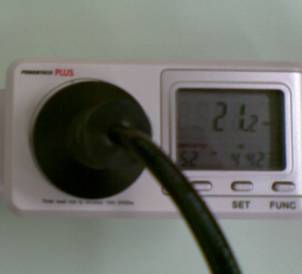 The Australian Government announced that electrical appliances sold after 2012 will
need to have a standby power consumption of 1 watt or
less and other countries are looking at similar goals. Some electronic devices
such as computer TFT screens and laptops already meet this standard. The use of switched mode power
supplies and a new range of power control silicon chips will help address this
requirement. Standard power supply sizes are available now that meet the 1 watt
standby.
The Australian Government announced that electrical appliances sold after 2012 will
need to have a standby power consumption of 1 watt or
less and other countries are looking at similar goals. Some electronic devices
such as computer TFT screens and laptops already meet this standard. The use of switched mode power
supplies and a new range of power control silicon chips will help address this
requirement. Standard power supply sizes are available now that meet the 1 watt
standby.
Suggestions:
Look for products with low standby power consumption. Turn on power management for computers. Measure where your standby power is being used.
Related Sections:
Measurement
Linear vs. Switched Mode Power supplies
Energy Star 4
80 Plus Power Supplies
Free Best Information Technology Practices
References for further information
22
23
24
Table of Contents
Reference Links
 These are the 2 main styles of power supplies used to make Direct Current to run various
appliances. Linear power supplies have fewer components but are larger and more
inefficient especially when lightly loaded. For external DC adapters, linear
power supplies have larger transformers and run warmer than an equivalent
switch mode power supply. Switched mode power supplies (SMPS) can be seen powering laptops and modern
mobile phone chargers. Their efficiency is usually at least 70% and can be
greater than 90%. If buying a computer try to confirm it is using an 80 Plus
(more than 80% efficient) switch mode power supply. Run battery chargers on a
timer instead of continuously to save some power. Consider replacing external
linear power supplies with switch mode power supplies if you understand
voltage, polarity, connectors and load. This could be useful for applications
such as broadband routers that run 24 hours a day. Some SMPS work with a large range of input voltage
making then useful around the world (e.g. 90 to 250 volts). Some suppliers are
now not selling linear power supplies at all.
These are the 2 main styles of power supplies used to make Direct Current to run various
appliances. Linear power supplies have fewer components but are larger and more
inefficient especially when lightly loaded. For external DC adapters, linear
power supplies have larger transformers and run warmer than an equivalent
switch mode power supply. Switched mode power supplies (SMPS) can be seen powering laptops and modern
mobile phone chargers. Their efficiency is usually at least 70% and can be
greater than 90%. If buying a computer try to confirm it is using an 80 Plus
(more than 80% efficient) switch mode power supply. Run battery chargers on a
timer instead of continuously to save some power. Consider replacing external
linear power supplies with switch mode power supplies if you understand
voltage, polarity, connectors and load. This could be useful for applications
such as broadband routers that run 24 hours a day. Some SMPS work with a large range of input voltage
making then useful around the world (e.g. 90 to 250 volts). Some suppliers are
now not selling linear power supplies at all.
Suggestions:
Always select switch mode power supplies if possible, turn off devices
at the wall when not in use. Consider charging some devices using USB power from the computer or in the car
using 12 volts when in normal use.
Related Sections:
80 Plus Power Supplies
Timers
References for further information
25
26
Table of Contents
Reference Links
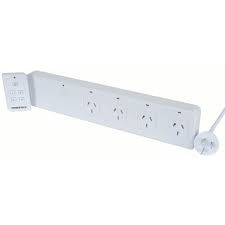 The best way to switch off devices is at the power point. The problem is that some power
points are not always readily accessible. To overcome this problem, consider
using a power board that includes a foot switch for under desk. Use a power
board with a master and slave arrangement; when the master is activated then
all the slave sockets also power up. This could be useful in a home theatre.
Another alternative is to look at remote control of power points directly or
via automation. Remote control system for a power point can be purchased for
around $40. A remote control power boards with 4 controlled switches are
available for around $60. This would be useful to turn off entertainment
equipment when access to the power points is difficult.
The best way to switch off devices is at the power point. The problem is that some power
points are not always readily accessible. To overcome this problem, consider
using a power board that includes a foot switch for under desk. Use a power
board with a master and slave arrangement; when the master is activated then
all the slave sockets also power up. This could be useful in a home theatre.
Another alternative is to look at remote control of power points directly or
via automation. Remote control system for a power point can be purchased for
around $40. A remote control power boards with 4 controlled switches are
available for around $60. This would be useful to turn off entertainment
equipment when access to the power points is difficult.
Automation
is a much more expensive consideration by existing mains cabling which is used
to send control signals to turn devices on and off. Devices than can be
controlled automatically include lighting, power points, shutters, curtains,
heating, cooling and irrigation. Related systems can also take care of
telephony, computer networks, audio distribution, video distribution and alarm
monitoring.
Suggestions:
Connect entertainment equipment on a common power board that can be
switched off with one switch when not in use. Simple automation can come in kit
form for retrofitting a building.
Related Sections:
USB Power board
References for further information
17
26
27
122
131
147
149
Table of Contents
Reference Links


